
A life shaped by the consequences of myopia – Q&A with Elaine Shaw
Sponsored by
In this article:
We speak with Elaine about growing up with myopia, the reality of living with its complications.
- When did you first realise there was a problem with your vision?
- How did you cope with your myopia during your school years?
- When did you realise your eyesight problems were more than simply needing stronger glasses?
- How does your vision impairment from myopia affect your daily life?
- What would you like clinicians and parents to take from your experience?
- Further reading
Myopia management is typically discussed in terms of refractive error, axial length, and the comparative efficacy of treatments. While this framing is necessary for clinical decision-making, it is also important to keep in mind that long-term consequences of myopia are real and possible,
Elaine Shaw's story illustrates what that risk can mean in real life. Elaine (pictured above) is 66 years old and was diagnosed with high myopia and myopic macular degeneration decades before myopia control existed as a clinical option. She has received 25 anti-VEGF injections in her right eye and 20 in her left for the treatment of choroidal neovascular membranes. Her ocular history is also significant for macular chorioretinal scarring and posterior vitreous detachment. From a likely myopia onset at age 5, Elaine was only in her mid-20s when the first complications from her myopia emerged. In this Q&A, we speak with Elaine about growing up with myopia, the reality of living with its complications, and what she wants eye care professionals and parents to understand about the value of managing myopia to slow its progression while the time-limited window for intervention is open.
When did you first realise there was a problem with your vision?
Elaine: The first time I realised there was a problem with my vision was during my first eye test at school, when I was five years old. The test used a series of letter Es in different orientations, and we had a template that we had to hold up in the same direction. With my right eye, I could only see the top letter, so I guessed the rest. I think the person testing me assumed I didn’t understand what I was supposed to do, so my myopia was left undetected, and I didn’t get glasses at that stage.
By the following year, I knew what to expect. This time the chart had proper letters, so I memorised them all the way down and recited them when it was my turn. They thought my eyesight was normal, and I continued doing that every year until I was 15.
How did you cope with your myopia during your school years?
Elaine throughout the years, from her school days through to adulthood.
Elaine: I had to adapt. I would always make sure I was sitting near the front, usually at the front desk, and really pay attention. Even then, I sometimes found it quite difficult to follow what was going on. I think I became very good at finding ways to manage without letting people know just how poorly I could see.
As I got older though, it became harder to compensate. By the time I was around 15, I was getting ready to go to college and out into the big wide world, and things were becoming increasingly difficult for me to cope with. I instinctively knew that I couldn’t keep hiding it and that I needed to take action and get glasses.
When did you realise your eyesight problems were more than simply needing stronger glasses?
Elaine: I was probably in my mid-twenties when I first realised there was a problem beyond short-sightedness. I went for an appointment with an optometrist, and they detected macular degeneration and referred me to the local hospital. It was quite an ordeal because I didn’t know what macular degeneration was. I remember the doctor talking to me about the possibility of losing my sight. I still get emotional when I go back and think about that experience.
My macular condition progressed slowly after that. I noticed small changes over the years, but the first major change was probably around 20 years after that initial diagnosis. While I was driving, I began seeing the backs of cars as though they were caved in and distorted, and I knew something wasn't right.
At that time, the treatment was intravitreal injections directly into the eye, and I found the experience absolutely harrowing. I can’t express the terror I felt.
It was like something from a horror film: lying there with my eye clamped open and watching a needle coming towards me into my eye. Even though the injection itself didn’t hurt, that didn’t take away the fear. And I’ve had to go through that experience many, many times.
How does your vision impairment from myopia affect your daily life?
Elaine: My eye condition affects me all the time, every day. It’s the backdrop to my life. Bit by bit, year by year, a little more of my sight is ebbing away. It’s often the simple, everyday things that people don’t think about and just take for granted.
Steps are a big problem. I describe it as living in an impressionist painting, where there are no clear edges to things. I can’t easily see where steps start and finish, or where the kerb is.
I had to stop driving during my working life as a medical secretary because I was having some very narrow misses. I also can’t see people’s facial features, including my own face in the mirror. I put my makeup on entirely by feel and then have someone check that there are no smudges. When people pass me in the street, I often need my husband to tell me who they are. Otherwise, I’ll smile and wave just in case it’s someone I know… so I do end up smiling at a lot of complete strangers!
What would you like clinicians and parents to take from your experience?
Elaine: When I heard that something could be done to slow the progression of myopia, I was absolutely amazed. What a breakthrough for children today, so that hopefully their myopia won’t progress to the stage where it causes serious problems later in life. I wish it had been available when I was younger. For children today, I think it’s an absolute life changer.
I don’t think health professionals realise how powerful they are, or how much influence they can have in this process. There are so many options available now, and the decisions and discussions they have with people can shape their lives.
For parents, a lot comes down to education. When you’re considering the cost of myopia control, I understand how that might be a part of decision-making. But having experienced significant vision loss myself, I see it from a very different perspective. There are so many everyday things I can no longer do or see in the way I once could. You can put a price on a pair of glasses or a box of soft contact lenses, but you can’t put a price on your sight. If more parents understood that these complications are a possibility, I think more would choose to take action.
Further reading
Meet the Authors:
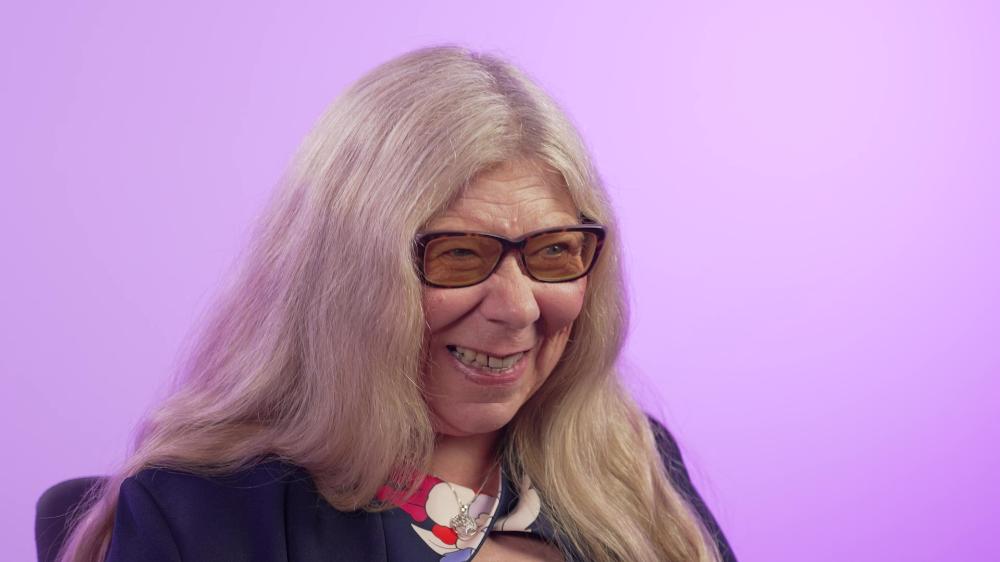
About Elaine Shaw
Elaine Shaw is a retired medical secretary who has lived with myopia since childhood and has experienced significant myopia-related ocular complications and vision loss throughout her adult life. Elaine is a member of the Macular Society and shares her lived experience to help raise awareness of the lifelong impact of myopia and the importance of protecting vision for future generations.
This content is brought to you thanks to an educational grant from
References
Enormous thanks to our visionary sponsors
Myopia Profile’s growth into a world leading platform has been made possible through the support of our visionary sponsors, who share our mission to improve children’s vision care worldwide. Click on their logos to learn about how these companies are innovating and developing resources with us to support you in managing your patients with myopia.